Summary: ABC came to us in search of new membership models they could import into their organization. As a social enterprise, it seemed unlikely to be sustainable, as the CEO invested heavily and did not make much return. Communication errors were abundant in this project, and team cohesion issues followed during debrief. I had argued the need for ABC to build revenue, not focus on membership models solely and certainly not focus on their 'personality.' I presented my business model to the head of the enterprise, who believed it was viable. Working with the client was both rewarding (to generate revenue and create social value) yet frustrating overall mainly due to the cohort. I felt the client could have been more helpful when discussing the brief.
-
Initially, confusion occurred across the MDI team, where conflicts arose over the direction of the workshop. I argued the main problem with ABC was to generate income so the enterprise as a whole could continue.
-
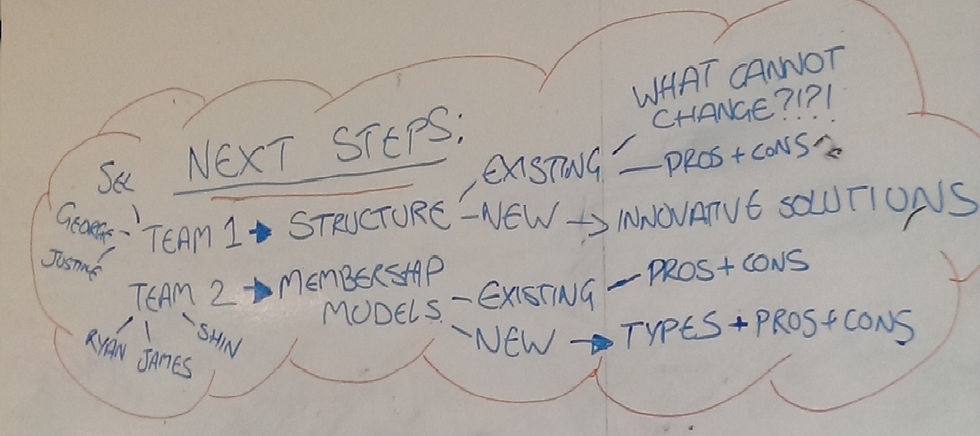
Stakeholder analysis preceded to see who could be involved in the process. Again, I reverse engineered success and produced a rough business. I personally thought this was a viable opportunity and therefore carried on working on the concept, against the opinions of others.

-
Although my initial idea seemed promising, I had no experience of social enterprises and how they operated. Further desk research led me to grasp a good understanding.
-
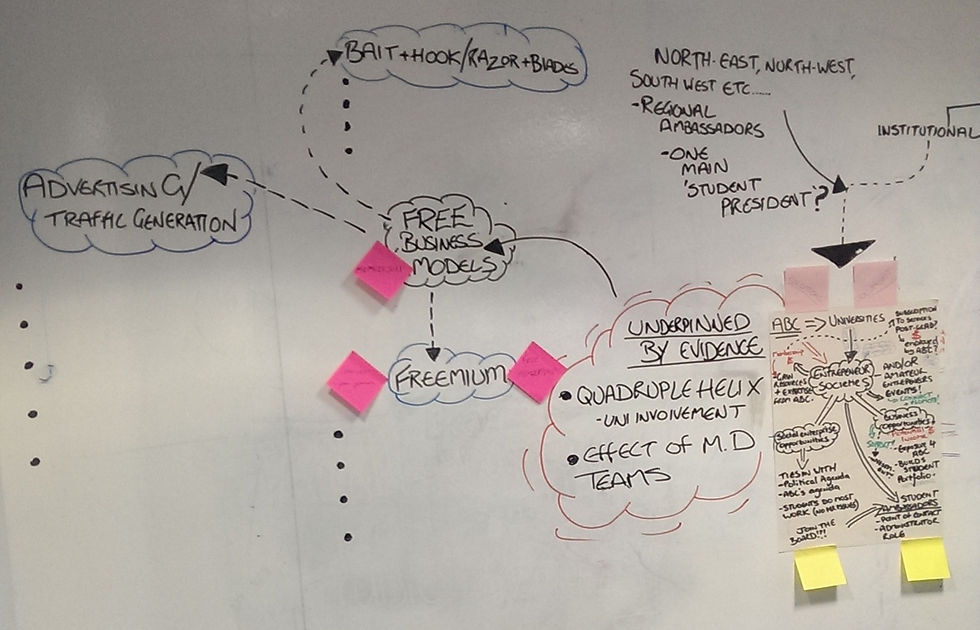
I investigated free business models that are widely used, but felt they were slightly out of scope in terms of relevance to the project. I felt it was necessary to gain resources externally, but for free using higher education establishments.
PRIORITY GRID
-
The theory behind my business idea was very compelling, emerging and innovative. Post-workshop, I did not feel any more informed as to satisfy the brief. This was due to the previous conflicts at the start of the project.
-
The final version of the business idea was presented to Ammar - in which he claimed this would be a viable option. My main goal here was to provide ABC with rich resources while minimising any extra costs.
Examples of creating an effective organizational structure in the Ideation phase
Essentially, my aim was to instil a co-creative network between the company, key stakeholders and users (societies) to create social value for the public. This was due to stakeholder analyisis carried out during design exploration phase.
Further theory application and a more detailed business plan can be found here.
In conclusion, this project gave me substantial experience in challenging a brief given by a client. The need to have an ongoing, communicative relationship with the client is imperative. The final outputs I felt did not convey our full potential as a cohort, which was disappointing. However, Ammar was pleased with the outcome, so I should not let this affect me in future projects. Nevertheless, I have gained knowledge in business, particularly social enterprises - which is vital in my professional development as I wish to pursue this in the future. In addition, a sound appreciation and knowledge developed in organisational structures and effective communication. This, in my opinion, is crucial in the running of a company/organization to achieve maximum productivity and understand core values.